
Self-Management: How To Prioritize And Be More Productive

As humans, people are constantly bombarded with daily tasks– whether at home, at school, or at work. Designed to mobilize the system that comprises the body, people need to keep up with the rest of the human force in order to survive. No one has the power to take control of what is to come; however, choices are available. So it is here that self-management is important.
At night, before sleeping, people think of the things that they will do the next day with a vivid imagination as to how it should be done. Come the next day, an unexpected problem arises and the plans that were thought of the previous night are compromised. Given that, how useful is self-management? And how can a person prioritize and be more productive at the same time?
What is self-management?
Self-management is being in-charge or in control of the things that need to be done with […]
 Remote teams are already a growing trend in various industries today, considering the benefits it gives to both team managers and members. It is expected to be even more popular as 50% of the workforce now is working various telecommuting roles and about 80% of all employees desire to work remotely for part of the week. However, many managers still cannot fully accept this and they have reasons for that. One of these is fear that they have no control over their actual productivity and level of commitment; therefore, putting the desired result for a project at risk.
 A team’s success lies in the hands of everyone and how they work together to achieve their common goals. It is every manager or CEO’s objective to put the people with the right skills set together. This is expected to result in high productivity and good quality outputs. However, in order to keep it like that, teams have to be kept motivated. As the years go by, employees can become lax, especially with mandatory overtimes, tight deadlines, and high expectations. When motivation fades, productivity falls and the company fails.
 Project management involves numerous operations being done simultaneously. It is like juggling a dozen balls and having to keep one’s eye on all of them. The challenge here is on how organizations can make sure that all processes are completed and quality output is delivered.
 Project management may now be considered as one of the most popular and widely-practiced fields today. More organizations have become involved in handling projects while the number of software for project management continues to grow. Moreover, various project management methodologies have sprouted and among these is the Agile methodology.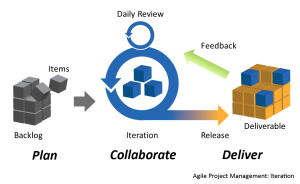
 Hive is a project management tool that provides the solution for seamless collaboration for project management teams and individuals. Regardless of the business’ size, Hive makes it easier to complete tasks and deliver quality project outputs. It was designed by its creators, John Furneaux and Eric Typaldos, to be suitable for all businesses across various industries. Hive allows teams to use it as a tool for centralized communication through its native chat and email integration. Moreover, it offers various project layouts wherein users can easily switch between them for easier organization. They can choose among the calendar, Gantt chart, Kanban board, and table for their convenience.
 Todoist
 Project management is a steadily growing field wherein numerous teams and organizations manage workflow and various projects. Project managers are at the top of these projects and are responsible for overseeing the members, clients, and projects. These team leaders need to have the right knowledge, experience, and qualifications to do their job. They have a variety of duties which include creating and implementing budgets, managing staff and team resources, coordinating tasks and their assignees, and understanding the technological needs of every assignment, among others.
 The competition among businesses is getting tougher by the day. Apart from the pressure to stay at the top, they also have to continue to work within their budget. This is oftentimes the reason why many employees work multiple roles. Being a skilled and competent worker can be one of the reasons. However, most often than not, their employers had no choice but to stretch their roles as a resource utilization strategy.